- Product: Flat pack tool holder, wall mounted, for Ryobi battery tools
- Type of work: Product development, design for manufacture
- Sold: Online, posted to customers
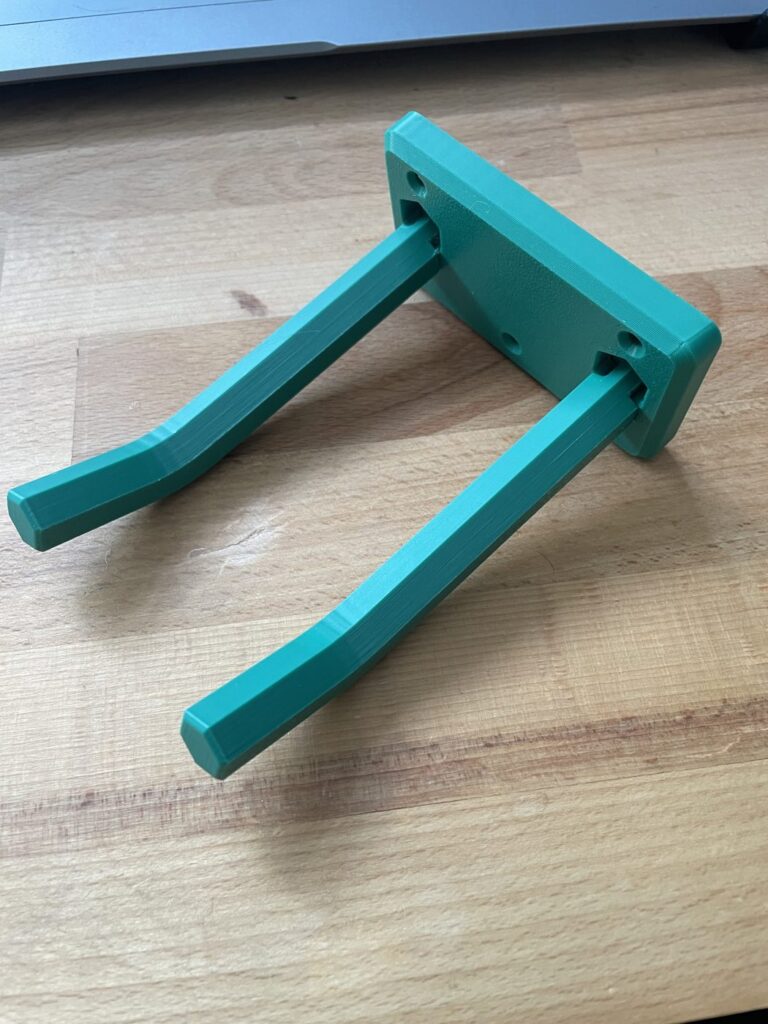
Project overview: the flat pack tool holder
This flat pack tool holder is one of my own products: a wall mounted holder for Ryobi battery tools, designed to be sold online and posted to customers. It was developed from the first idea through to a product ready to manufacture and sell.
The challenge and the thinking behind it
Holding the tools was the easy part. Postage was the real problem. Couriers and Royal Mail price parcels by size and weight, so a bulky product costs more to send.
After all, a tool holder is bulky. A bulky parcel can easily cost more to post than the product is worth, which either wipes out the profit or pushes the price beyond what customers will pay.
So I treated the parcel size as a design requirement from day one, alongside strength and fit. The question became: how do you make a holder that arrives in a small, cheap parcel and still feels solid on the wall?
Design solution: a flat pack tool holder
Instead, I designed the holder as a set of flat parts that pack together and go together easily once they arrive. As a result, it fits within an economical postage size when packed.
I also kept the parts simple to manufacture, and made assembly straightforward so customers can put it together without special tools or skills.
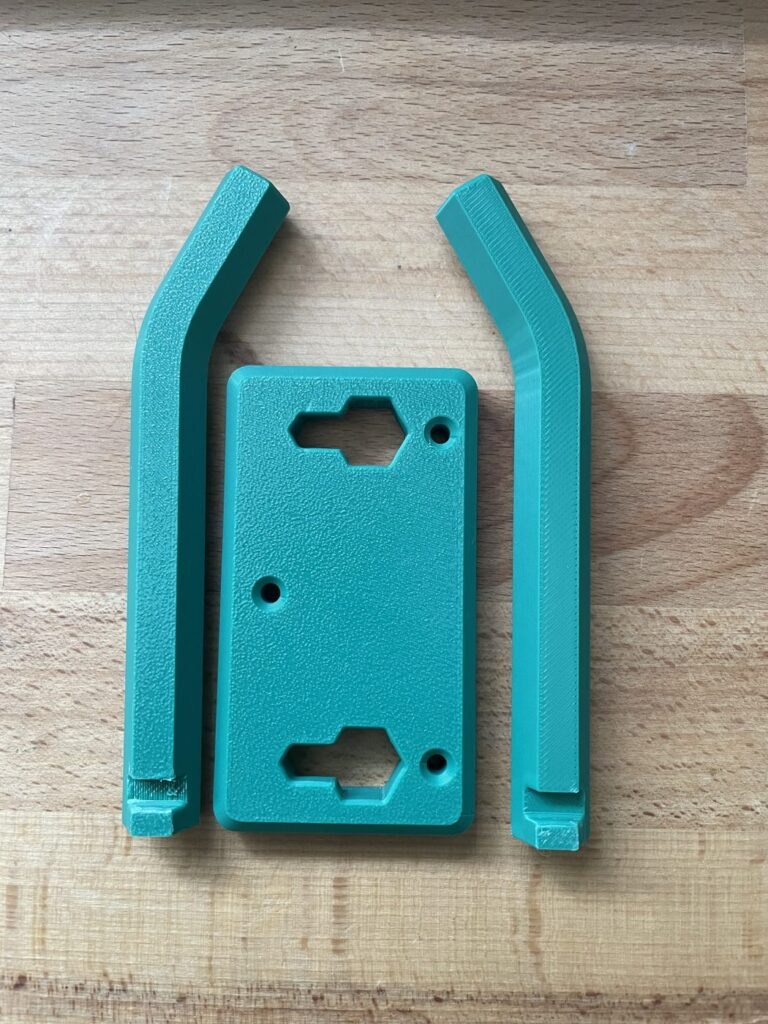
Design considerations
- Postage size: the packed size had to stay within a cheaper postage band
- Ease of assembly: the customer puts it together, so it had to be obvious and simple
- Strength once assembled: it holds heavy tools on a wall, so it had to be rigid once built
- Print orientation: each part needed to print in the direction that makes it strongest
- Manufacturing cost: few, simple parts that are quick to produce
- Tool fit: tools need to drop in and lift out easily, and sit securely
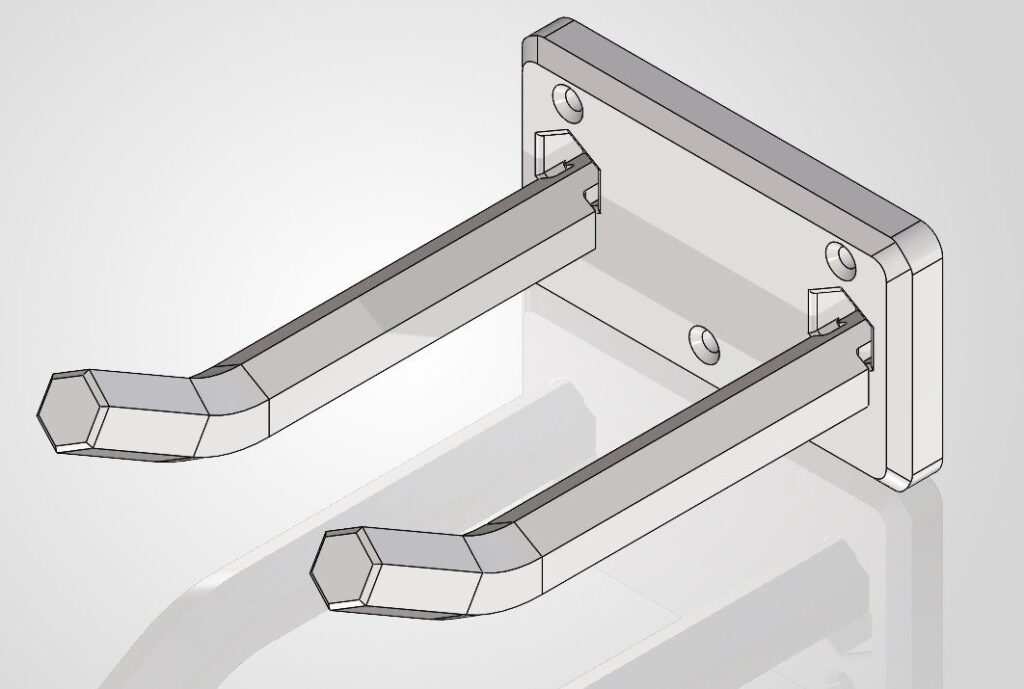
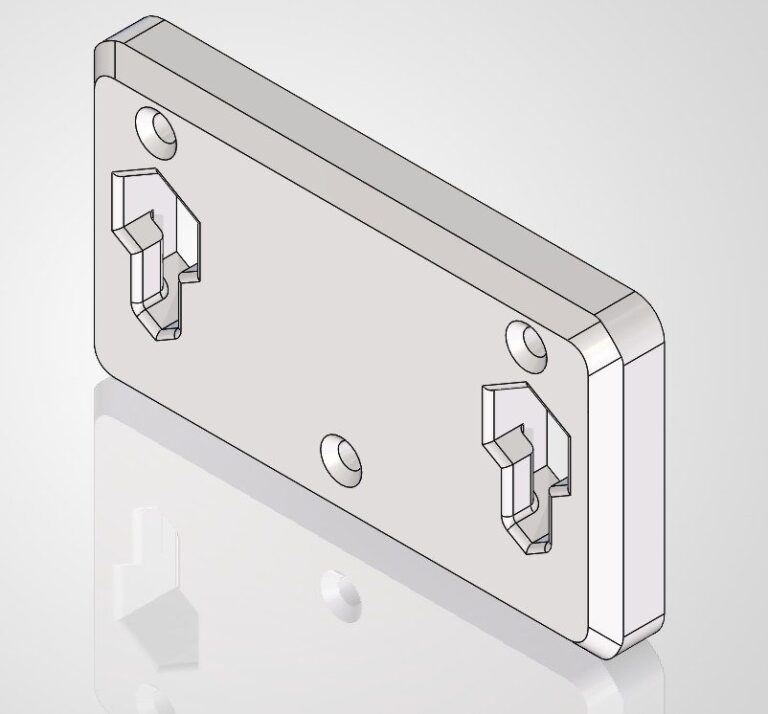
Engineering rationale behind the flat pack tool holder
Postage is priced on size and weight. Because of that, the packed shape of a flat pack tool holder matters as much as the product itself. Flat parts nest tightly together, which cuts the parcel size far more than any change to the holder’s appearance could.
Splitting the holder into flat parts also tends to make each part simpler to produce, which helps keep the unit cost down.
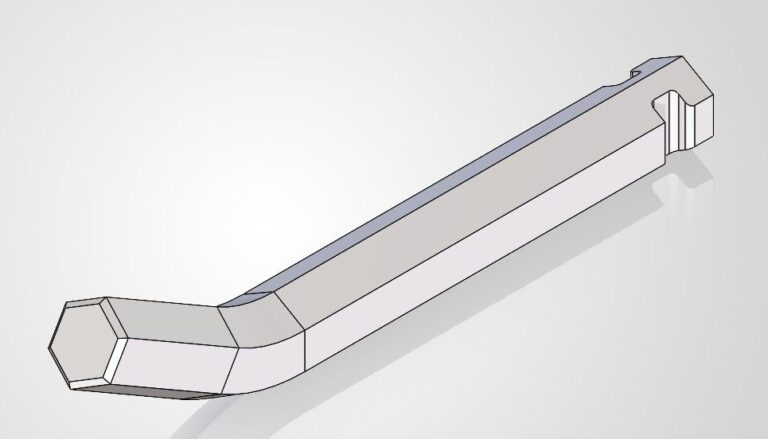
There is a second, less obvious benefit. A 3D printed part is built up in layers, and it is strongest along those layers and weakest between them. If the holder were printed as one piece, at least some of it would have to print in a weak direction. Because the arms are separate parts, each one can be printed lying down, so the layers run along the length of the arm. The weight of the tools is then carried along the layers rather than trying to split them apart.
So one decision solved two problems. Separate parts let every part print in its strongest orientation, which makes the holder more durable. The same separate parts pack flat into a small box, which keeps the cost to make and post it down.
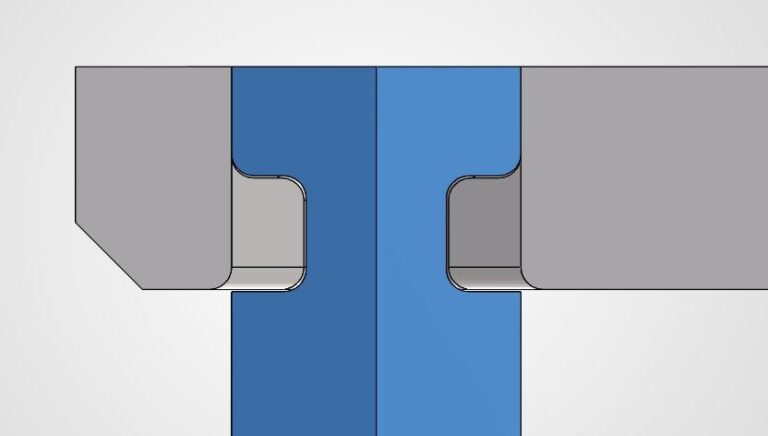
The design work then focused on making the assembled holder rigid, so the flat pack approach doesn’t come at the cost of a holder that feels flimsy on the wall.
Deliverables
- 3D CAD models of each part and the full assembly
- Manufacturing files for production
- A finished product ready to sell online
Outcome
The finished flat pack tool holder ships in a smaller, cheaper parcel. Lower postage keeps the selling price competitive, and simple parts keep it quick to make. Printing every part in its strongest orientation also makes the holder more durable in daily use.
It shows why manufacturing and delivery questions belong at the design stage. A few early decisions here made the difference between a product that pays and one that doesn’t.
Ryobi is a trademark of its owner. This holder is an independent design and is not affiliated with Ryobi.
Services used
Buy the finished mount
The wall mount from this project is now available in my shop. It is printed in tough black PETG, arrives flat with fixing screws, and fits most Ryobi ONE+ tools.
Talk to Ben about your project
If you have a part or product that needs designing, drawing or improving, I’d like to hear about it. The first call is free, and you’ll get a clear quote before any work starts.